


Driver's License Practice Test
4.7637.00 Reviews
App Specs
- Version
- 1.6.1
- Updated On
- License
- Free
- Downloads
- 100,000+
- Developer
- Rall Softwares
- Categories
- Education
- Platform
- Android
Screenshots
 Analysis by AppCompare
Passing a driving test is less about memorizing a few signs and more about recognizing the rule that applies when several things happen at once. That is where Driver's License Practice Test makes sense. I used it as a compact study tool rather than treating it like a complete replacement for a driving instructor, and its main value is clear: it gives me a focused way to rehearse the kind of knowledge I need before sitting behind the wheel or taking the written exam.
Developed by Rall Softwares, this free Education app is aimed at people preparing for a driver's license test. It is suitable for Everyone, works on devices running Android 7.0 or later, and has reached over 100 thousand installs. Its average rating is 4.7 from around 8.1 thousand ratings, which suggests that many learners find the format useful. I would still judge it by how well it fits my own study habits, because a practice app can be helpful without covering every part of real-world driving.
The practice-test approach and why it matters
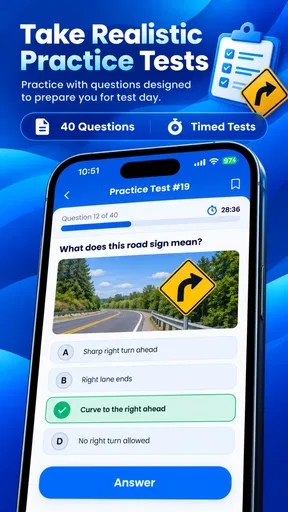
The central capability is straightforward: Driver's License Practice Test turns license preparation into repeated question practice. Instead of opening a long manual and trying to decide what to study first, I can work through test-style prompts and use mistakes as a guide for the next review session. That narrow focus is its strongest quality. It keeps preparation active, which is usually more effective than reading traffic rules passively and assuming I will remember them later.
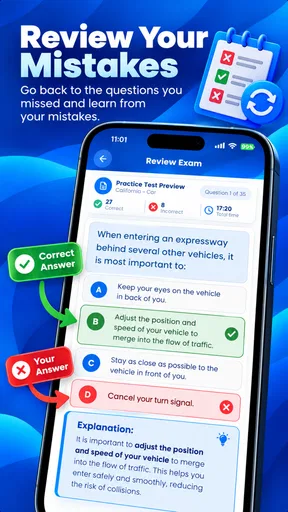
I found the approach especially useful for checking whether I truly understand a rule. When I read a handbook, an answer can feel familiar simply because I have seen the wording before. A practice question forces me to choose. That small act exposes weak spots: signs I confuse, right-of-way situations I oversimplify, or safety rules I remember only vaguely. The app therefore works best as a feedback loop rather than as a one-time quiz.
The store summary presents it as a way to prepare with confidence, but I would interpret that carefully. Confidence should come from repeated correct decisions and from understanding why an answer is correct, not from rushing through questions until a score looks comfortable. Used properly, the app can help me identify what deserves attention. Used casually, it can create false confidence if I memorize answer patterns instead of learning the underlying rule.
That distinction is important because written driving tests often reward careful reading. A question may contain a small condition that changes the best response. My useful habit is to slow down whenever a prompt mentions visibility, intersections, pedestrians, emergency vehicles, weather, or another road user. I treat each question as a situation to interpret, not just a card to clear. This makes the practice more transferable to the real test.
What a study session feels like
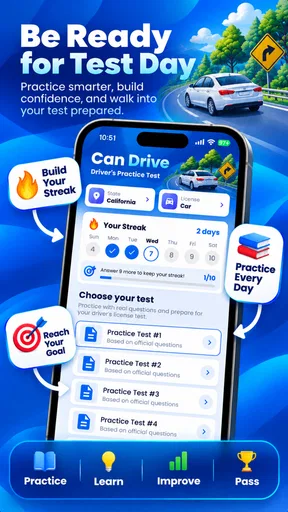
I would use the app in short sessions rather than trying to finish all preparation in one sitting. A practical routine is to begin with a small batch of questions, note the subjects that caused hesitation, and then return to those areas after a break. The goal is not merely to increase the number of completed questions. It is to reduce uncertainty and make the correct response feel logical.
Worth Reading Before You Choose

EA SPORTS FC Mobile 26 Is a Bigger Football Game, but It Takes Time

Flipboard Shows What News Apps Must Do Beyond the Feed

Switching to Android Auto Means Rethinking Your Driving Routine

Google Calendar Makes a Crowded Week Easier to Manage

Ludo King Makes the Most of the Minutes Between Plans

Baby Panda World Brings Quick Play to Modern Phones, but Its Game Library Feels Busy
One technique that works well is keeping a simple mistake list outside the app. I write down the topic, the answer I selected, and the reason it was wrong. If I only remember the correct option, I may repeat the same error when the wording changes. Writing the rule in my own words turns a missed question into a useful lesson and prevents the app from becoming a guessing exercise.
I also recommend answering without looking for clues in the wording. Some learners develop shortcuts, such as choosing the longest answer or selecting the option that sounds most cautious. Those habits may help occasionally, but they do not build dependable knowledge. I get more value by explaining to myself why each alternative is less suitable before moving on.
Because this is a mobile app, it fits naturally into spare moments: a quiet break, a few minutes before an appointment, or a short review at home. I would not use it while walking near traffic, driving, or handling any situation that requires attention. Its convenience is a study advantage, not a reason to treat road rules casually.
A realistic preparation routine
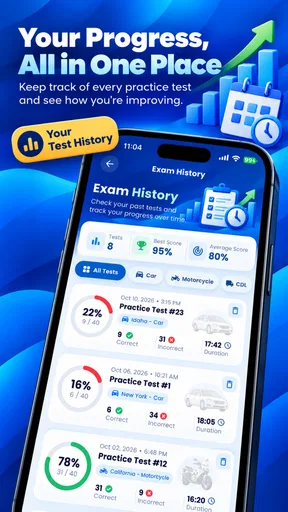
Imagine someone who has already read the local driver's handbook but keeps mixing up signs and priority rules. After work, that person can open the app for a short practice session, answer questions without checking notes, and record the topics that caused hesitation. The next evening, the learner reviews those topics first and then takes another set of questions. After several sessions, the app becomes a way to measure readiness through consistency rather than through one lucky result.
I like this workflow because it separates three jobs that are often confused. The handbook supplies the official explanation, the practice app reveals what I can recall, and an instructor or experienced driver helps connect the rule to physical road situations. Driver's License Practice Test is strongest in the middle of that process. It is a rehearsal tool, not the entire learning system.
For a learner with very little time, this distinction can prevent wasted effort. Instead of rereading every page equally, I can use practice results to decide where to spend more attention. That makes the app more valuable than its simple format might suggest. It does not need to replace a manual to improve preparation; it only needs to show me where my memory is unreliable.
Where it fits beside other study options
The usual alternative is a printed or official digital handbook. That source remains essential because it explains the rules in full and should be treated as the authority for local requirements. The advantage of the handbook is depth. The disadvantage is that it can be difficult to tell which sections I have genuinely learned. Driver's License Practice Test adds active recall and makes weak areas easier to notice.
Another alternative is a driving school lesson. Lessons are better for steering, observation, positioning, hazard awareness, and decision-making in real traffic. No quiz can reproduce the pressure of a busy junction or the need to judge a safe gap. On the other hand, lessons are not always the easiest place to repeatedly drill basic theory. The app can prepare the knowledge that lets me use practical instruction more effectively.
Some learners rely on informal online quizzes. Those can be convenient, but quality and relevance may vary. A dedicated license-practice app feels more focused because I open it with one purpose: preparing for the theory portion of driving certification. I would still compare difficult or unfamiliar rules with the official handbook, especially if my local test has specific wording or regulations.
The app is also a better fit for someone who prefers quick repetition than for someone who learns mainly through long explanations. If I need diagrams, detailed legal context, audio instruction, or personalized feedback from a teacher, a handbook, course, or instructor may be the better primary resource. The practice-test format is useful precisely because it is limited and direct.
The tradeoff between convenience and completeness
The biggest limitation is the same feature that makes the app approachable: it concentrates on practice questions. A question can tell me whether my choice was right, but that alone may not explain the full reasoning behind the rule. When I miss something, I should pause and consult a reliable study source instead of immediately repeating the question. This extra step takes time, but it is what turns a quiz into learning.
There is also a risk of studying for the pattern rather than for driving knowledge. Repeated exposure can make familiar questions feel easy even when I would struggle with a new scenario. To avoid that, I vary my routine, read every option carefully, and explain answers in my own words. I also try to connect abstract rules with situations I have seen as a passenger or during supervised practice.
The free price makes it easy to try without committing money, but the app includes optional in-app purchases ranging from $1.90 to $19.99 per item. That does not automatically make it poor value, yet I would look at what I can use without paying before deciding whether an upgrade is worthwhile. A learner who only needs occasional revision may have different priorities from someone preparing intensively.
The current version is 1.6.1, which is useful context when deciding how to approach the app. I would keep the application updated when an update is available, but I would not assume that an app version alone guarantees that every rule matches my local authority's latest requirements. Driving regulations can be jurisdiction-specific, so official material still deserves the final word.
Another practical tradeoff is attention. Short quizzes are easy to fit into a day, but they can also encourage shallow sessions in which I tap through answers without reviewing errors. I get the best results when I set one clear purpose before opening the app: signs today, right-of-way tomorrow, or a review of mistakes from the previous session. That small structure makes the limited format work harder.
Who will benefit most
I would recommend Driver's License Practice Test most strongly to a first-time learner who has access to an official handbook and wants a convenient way to test recall. It is also useful for someone returning to the theory test after a long gap, particularly when the main problem is uncertainty rather than a total lack of study material. The app gives those learners a repeatable checkpoint between reading and taking the exam.
It can also help a busy learner who needs flexible revision. A person with irregular work hours may not be able to attend frequent theory sessions, but can still build a routine around short practice periods. The important point is consistency. A few thoughtful sessions that lead to review are more valuable than a single marathon attempt followed by weeks without practice.
People who learn by testing themselves will probably enjoy it more than people who want a guided course from the first screen. If I prefer an instructor to explain every answer before I attempt it, I may find the app too bare or too repetitive. Likewise, someone looking for practical driving coaching should choose lessons, because question practice cannot teach vehicle control or replace supervised road experience.
I would also be cautious about relying on it alone if I am preparing for a highly specific local test. The safest workflow is to use the app for recall, then verify uncertain rules in the official material for my area. That is not a criticism of this particular tool; it is a sensible boundary for any general practice application dealing with driving laws.
Small habits that improve the results
My first tip is to separate confidence from familiarity. Before answering, I ask myself whether I know the rule or merely recognize the question. If the wording looks familiar but I cannot explain the reason, I mark the subject for another review. This prevents repeated exposure from being mistaken for mastery.
My second tip is to review near-misses, not only wrong answers. Hesitating between two options shows that a rule is not yet automatic. Those questions deserve attention because test pressure can turn uncertainty into a mistake. I would keep them in the same notes as incorrect answers and revisit them later.
My third tip is to pair every theory session with a real-world observation when possible. As a passenger or supervised learner, I can notice signs, lane markings, crossings, and priority situations that relate to the topics I studied. I do not use the app while moving, and I never let studying distract me from traffic. The point is to connect the question format with safe observation, not to turn the road into a classroom for a phone.
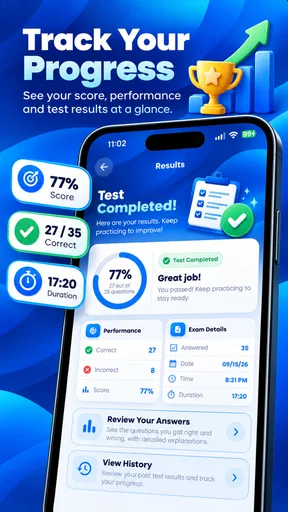
Finally, I would stop using practice scores as the only measure of readiness. A better sign is whether I can explain the rule, recognize it when the wording changes, and apply it calmly in a supervised real-life situation. The app helps with the first part of that process, while the handbook and practical instruction complete the picture.
Driver's License Practice Test is a focused, accessible study companion from Rall Softwares. Its free entry point, Everyone age rating, and support for Android 7.0 or later make it easy for many learners to try, while the strong user response gives it a credible place among mobile revision tools. The optional purchases mean I would check the available material before spending, but the main decision is really about learning style.
My honest recommendation is to use it as a testing engine inside a broader plan: read the official rules, answer questions, investigate mistakes, and reinforce the ideas during supervised driving. Its real strength is turning passive reading into active recall. If I wanted a full driving course, detailed legal guidance, or hands-on coaching, I would choose another resource. If I wanted a practical way to discover what I actually remember before the theory test, I would gladly keep Driver's License Practice Test on my phone.
Pros
- Covers many common road signs and traffic-rule questions.
- Short practice sessions fit easily into daily study routines.
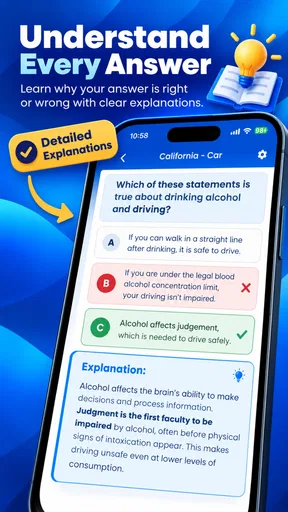
- Immediate answers help identify mistakes while practicing.
- Useful for learners preparing before taking formal driving lessons.
- Simple interface makes the app easy to navigate for beginners.
Cons
- Question wording may differ from your local licensing exam.
- Some features or question sets may require in-app purchases.
- It does not replace supervised driving or practical road experience.
- Repeated questions can make practice feel less challenging over time.
- Accuracy and relevance may vary depending on the selected region.
FAQs for Driver's License Practice Test
What is Driver's License Practice Test?
Driver's License Practice Test is a study app designed to help learners prepare for their written driving exam. It typically includes multiple-choice questions based on traffic signs, road rules, safe driving practices, and local regulations. After answering, users can review their results and identify weak areas before taking the official test.
Can this app help me pass the official driving knowledge test?
The app can be a useful preparation tool, especially if you regularly complete practice quizzes and review incorrect answers. However, it should not be considered a guarantee of passing. Driving laws and exam questions vary by location, so you should use the app alongside your official driver handbook and confirm that its content matches the requirements of your state or country.
Does Driver's License Practice Test work for every state or country?
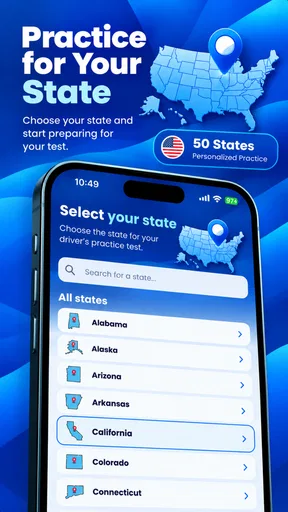
Coverage depends on the version of the app and the location you select. Some versions provide separate question sets for different states, provinces, or countries, while others may use more general road-safety material. Before downloading, check the app listing and available settings to make sure your local signs, laws, penalties, and licensing requirements are included.
Can I use the app without an internet connection?
Offline availability depends on the app’s design and the features included in your version. Basic question sets may remain accessible after they have been downloaded, but advertisements, progress synchronization, updates, or location-specific content could require an internet connection. It is a good idea to open the app once before studying offline and confirm which sections are available.
Is Driver's License Practice Test free to use?
The app may offer free access to a selection of quizzes, while additional tests, explanations, ad removal, or advanced study modes can require in-app purchases or a subscription. Review the download page carefully for pricing details, trial conditions, and recurring charges. Even when the app is free, mobile data usage and optional purchases may still apply.


